

Long before Rome ruled the Mediterranean, Sicily was Greek. From the 8th century BC, settlers from Euboea, Corinth, Rhodes, and Megara sailed west and built cities that, for a time, rivalled Athens itself in wealth and ambition. Their temples, theatres, and city walls still stand across the island today, scattered from the eastern coast to the windswept hills of the interior. This is a journey through that lost world — Magna Graecia, as the Romans later called it — walking the same ground its builders once did.
Around 734 BC, a group of Chalcidian settlers from Euboea, led by a man named Theocles, came ashore on a low lava headland on Sicily’s eastern coast. They named their new home Naxos, after their ally island in the Aegean, and raised an altar to Apollo Archegetes — “the Founder” — where Greek travellers departing Sicily would later stop to make an offering. It was the first Greek settlement on the island, and within just a few years its people had pushed on to found Leontini and Catania as well. Naxos itself didn’t survive the wars between the Sicilian Greek cities; it was destroyed in 403 BC. But its refugees eventually resettled on the hill above, founding what we now know as Taormina. Today the quiet archaeological park at Capo Schisò, just outside modern Giardini Naxos, marks the spot where Greek Sicily took its first breath.
Founded by Corinthian colonists in the late 8th century BC, Syracuse grew into one of the most powerful cities in the entire Greek world — Cicero would later call it the greatest and most beautiful Greek city of all. Its showpiece is the Greek Theatre, carved directly into the rock of the Temenite Hill within the Neapolis archaeological park. First built in the 5th century BC and later enlarged under Hieron II to a diameter of nearly 140 metres, it’s one of the largest theatres to survive from antiquity, with seating for around 15,000 spectators looking out over the harbour and the island of Ortygia. The playwright Aeschylus is believed to have staged work here in person, and the theatre still hosts a season of classical Greek drama every May and June. Syracuse was also home to Archimedes — proof that this was a city as devoted to ideas as it was to power.
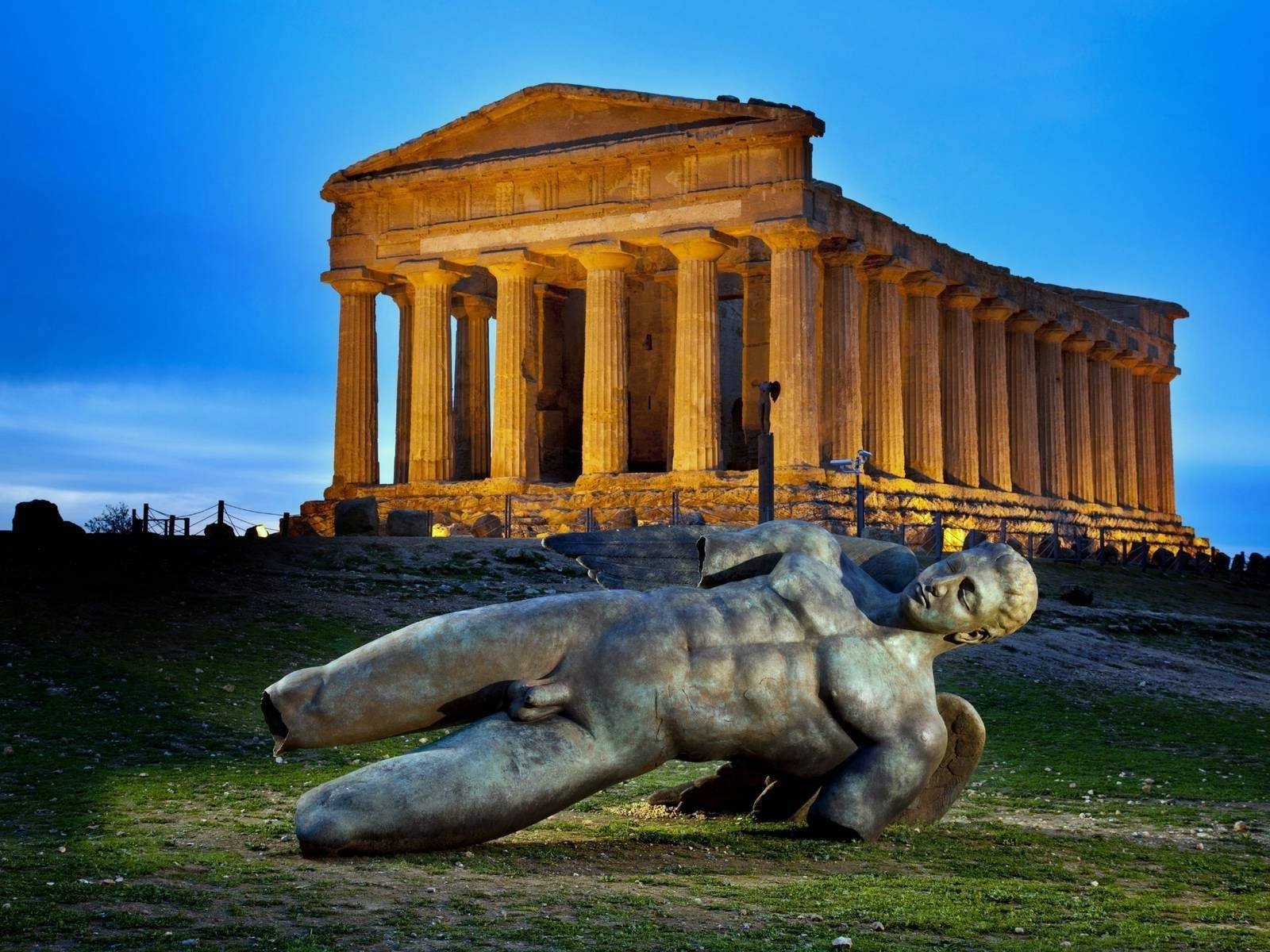
On Sicily’s southern coast, the city the Greeks called Akragas was founded around 580 BC by colonists from nearby Gela, joined by settlers from Rhodes and Crete. It grew quickly into one of the richest cities in the Mediterranean, and its wealth is written into the ridge of Doric temples that still line its skyline — what’s known today as the Valley of the Temples, despite not technically being a valley at all. The best preserved of the group, the Temple of Concordia, has stood largely intact since the 5th century BC and is considered one of the finest examples of Doric architecture anywhere. Walking the ridge at golden hour, with the temples catching the last light and the sea stretching out below, it’s easy to understand why UNESCO named this a World Heritage Site in 1997.
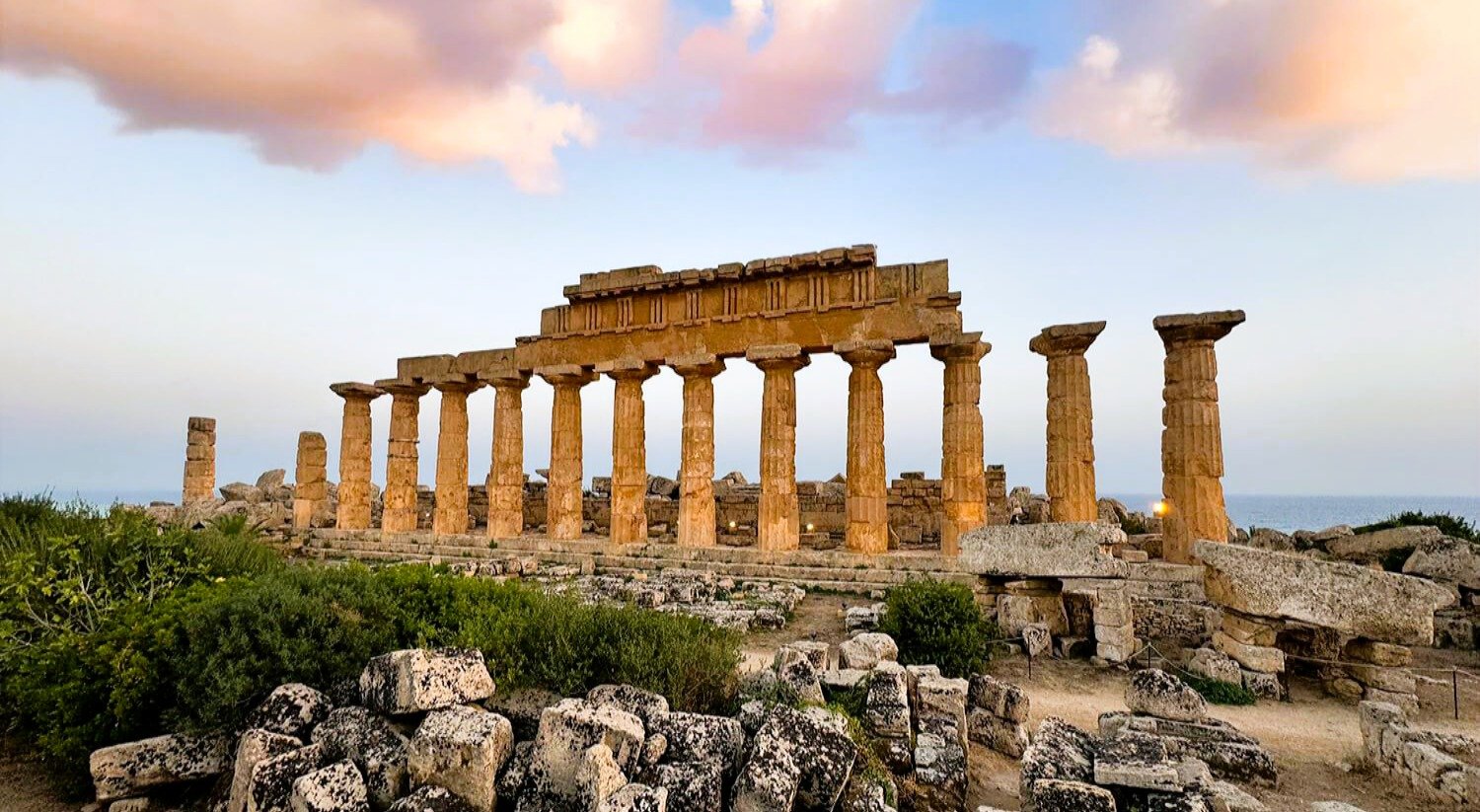
Not every great temple in Sicily was built by Greeks. Segesta, in the island’s northwest, was the capital of the Elymians — one of Sicily’s indigenous peoples, who traced their own origins to Troy. Drawn into a long rivalry with the Greek city of Selinunte, the Elymians began building a grand Doric temple in Greek style around the 420s BC, likely as a political statement aimed at their ally Athens. It was never finished. The columns were never fluted, the inner chamber was never built, and the roof never went on — yet that incompleteness is exactly why the temple has survived so well, with all 36 columns still standing on its hilltop above the Sicilian countryside. A short walk up Monte Barbaro brings you to Segesta’s theatre, with views stretching to the coast.
Selinunte, founded by Greek colonists from Megara Hyblaea in the 7th century BC, became one of the great cities of Magna Graecia, its temples rising over the coastline of southwestern Sicily. Its long-running conflict with neighbouring Segesta eventually drew in Carthage, and in 409 BC a Carthaginian army stormed and destroyed the city. What remains today is extraordinary in scale — the largest archaeological park in Europe, spreading across an acropolis, two temple-covered hills, and the remains of a sanctuary, with the sea as a backdrop throughout. Far fewer visitors make it out this way compared with Agrigento or Syracuse, which only adds to the sense of having the ruins to yourself.
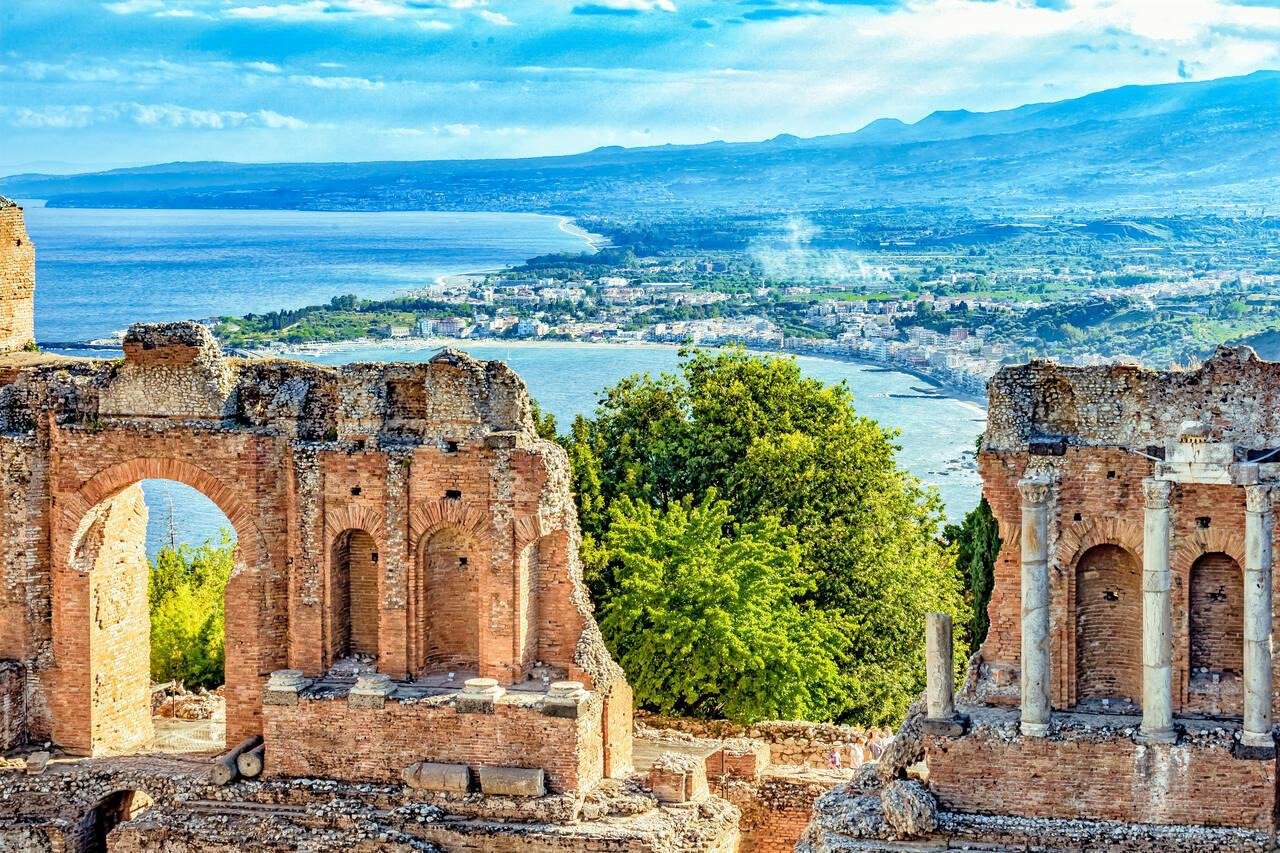
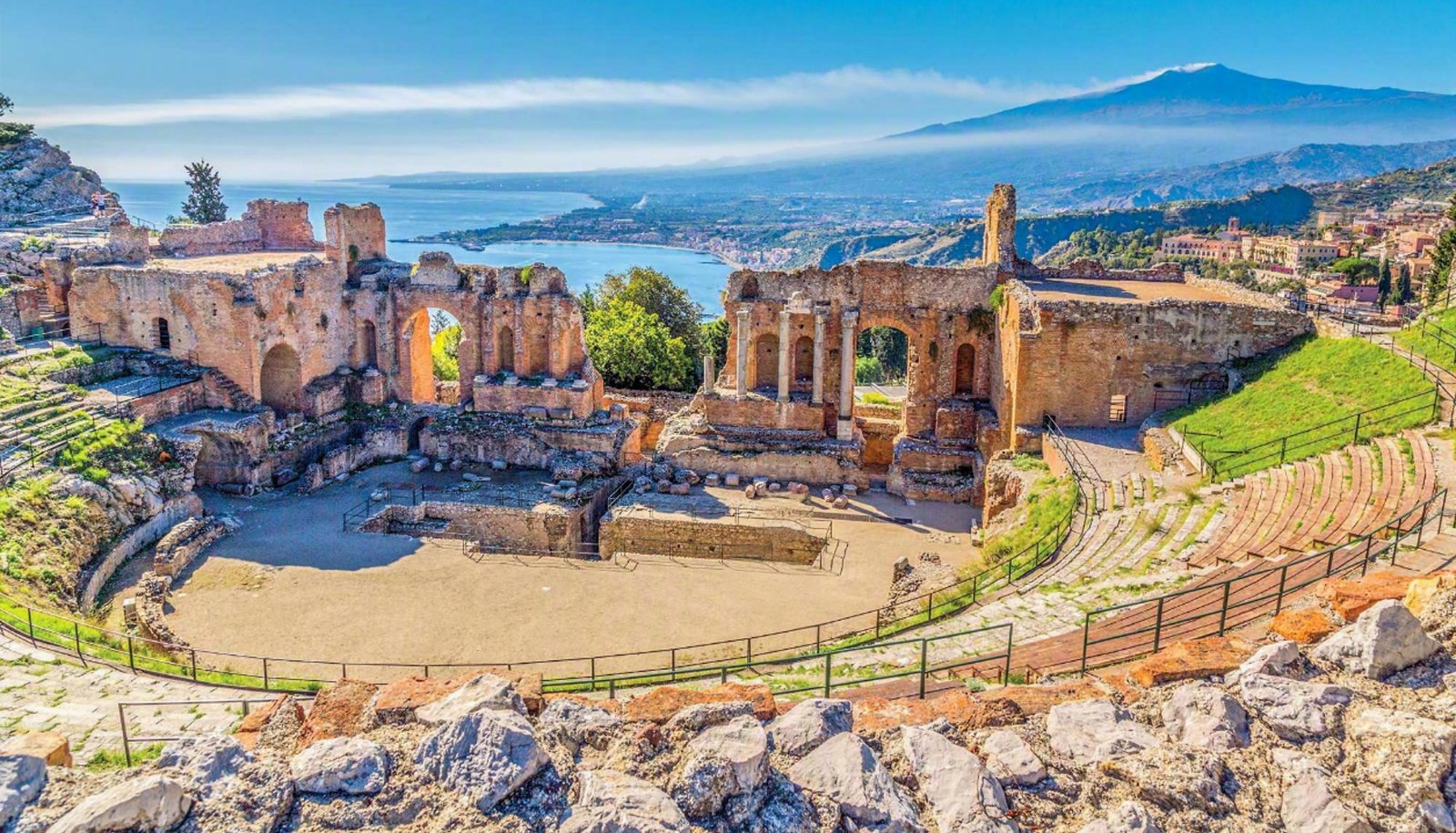
Taormina’s story is woven into Naxos’s own: after Naxos was destroyed in 403 BC, its scattered descendants eventually resettled on the hilltop above, founding what became Tauromenium. Today, the town’s Greek Theatre is one of Sicily’s most photographed sites, its ancient seating framed by views of the Ionian Sea on one side and Mount Etna on the other — a backdrop no set designer could improve on. It still hosts concerts and festivals through the summer months. If you’re planning a trip through Greek Sicily, spring and autumn bring milder temperatures and thinner crowds at the major sites, and most of the archaeological parks are open year-round on extended seasonal hours — it’s worth checking the official site for the season you’re travelling in, since hours shift through the year. Comfortable shoes are non-negotiable; many of these sites involve uneven ancient stone underfoot.
Quick facts
Few places let you walk through three thousand years of history in a single trip the way Greek Sicily does. If a culturally rich trip is calling, explore our Cultural Tours or tell us what you have in mind and we will design a custom experience around it. Have a question? Get in touch — we would love to help you plan it.